



Supporting your dog after adoption
Adopting a dog is a big change… for you, but especially for them.
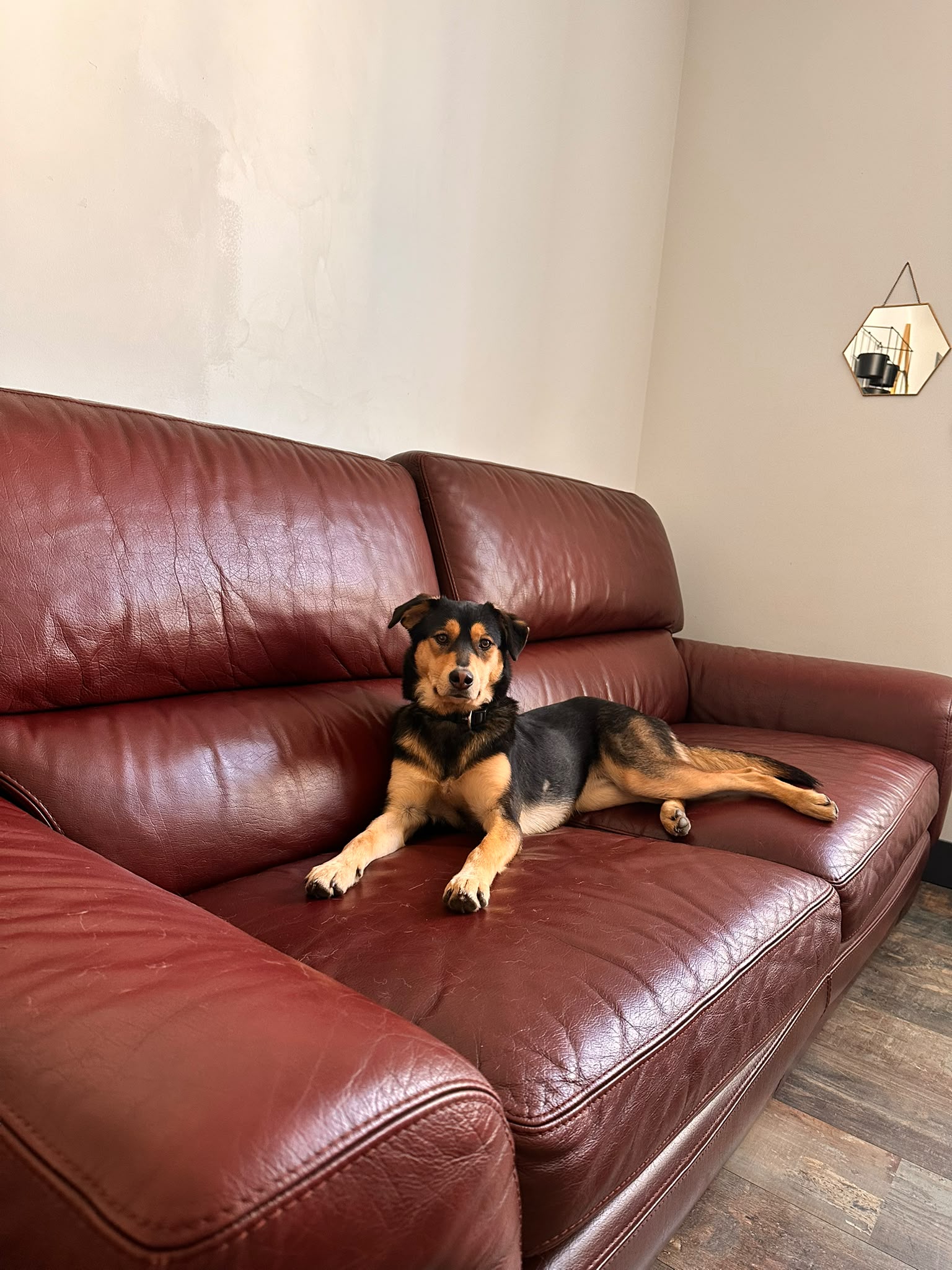
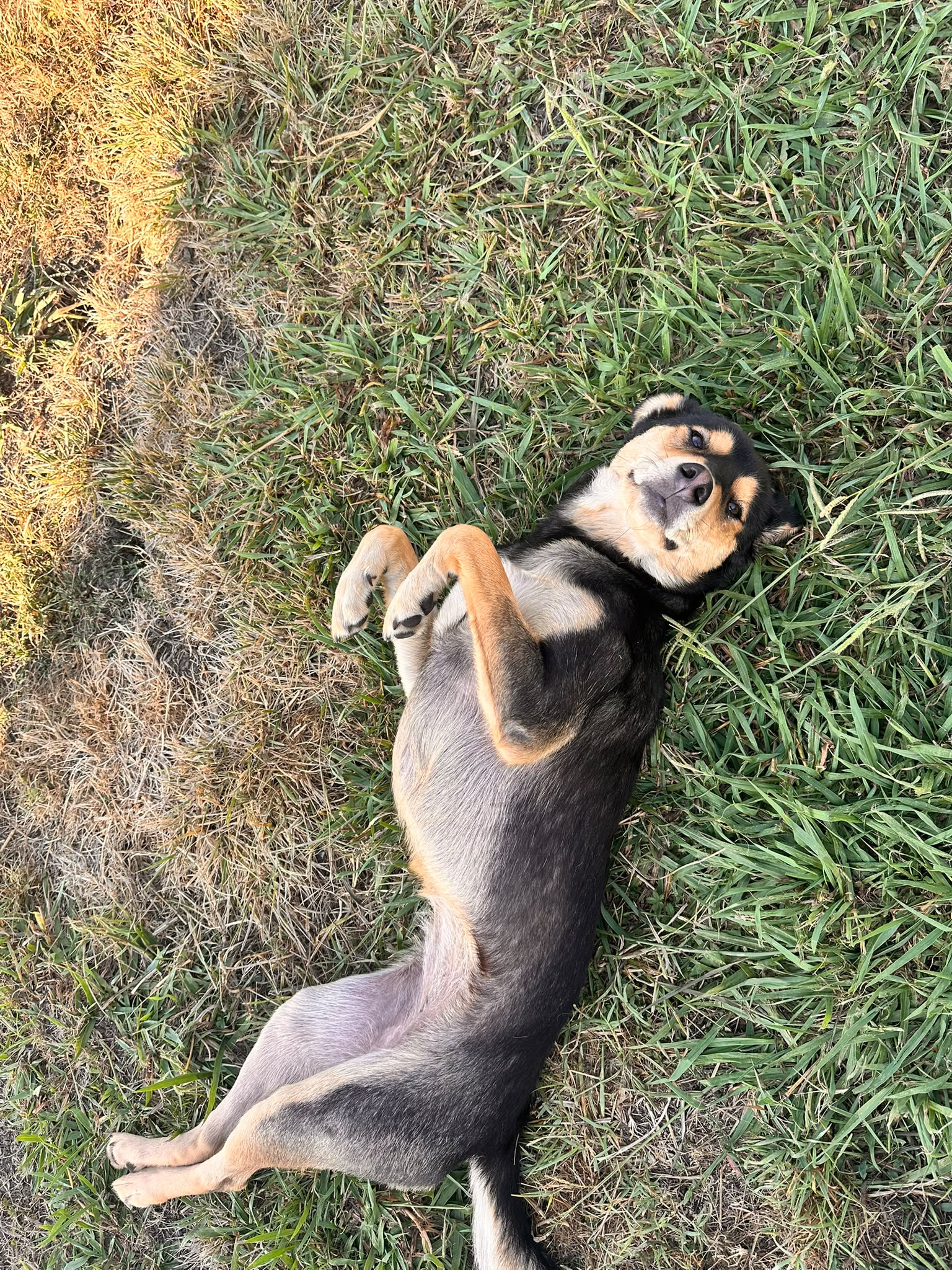
When a dog arrives in a new home, they are discovering new people, new smells, new sounds, new rules and often an environment that is very different from what they knew before. For a puppy or a dog that has grown up in a shelter, some situations may even be completely new.
It is therefore perfectly normal for their behaviour to change considerably during the first few weeks.
The dog you welcome today may still change a lot
During the first few days, some dogs are very calm, quiet or seem particularly easy. This does not necessarily mean they will always behave exactly this way.
At first, a dog may feel overwhelmed, inhibited or simply be busy observing their new environment. As they begin to feel safe, they may gain confidence, explore more and express their emotions and behaviours more freely.
You may therefore gradually notice:
- more energy or excitement;
- more playful behaviour;
- increased requests for attention;
- fears that were not obvious at first;
- barking;
- difficulties during walks;
- reactivity towards certain dogs, people, vehicles or situations;
- behaviours linked to frustration or adolescence.
This does not necessarily mean that the dog is “becoming difficult”. They may simply be starting to show more of who they really are.
Every dog develops at their own pace: a few days for some, several weeks or several months for others. For some dogs, especially when they have had a difficult past or when many things are new to them, it may take a year or sometimes even longer before they fully find their bearings. Be patient: adapting to a new life is a process that can take time.
At first: less is often more
It can be tempting to immediately introduce your dog to their entire new life: long walks, the city, restaurants, public transport, visits to friends, meetings with lots of dogs…
For a newly adopted dog, this can represent an enormous amount of information in a very short period of time.
During the first few weeks, it is generally better to prioritise:
- a relatively predictable routine;
- calm walks;
- enough sleep and rest;
- environments in which the dog feels comfortable;
- short and positive experiences;
- the opportunity to observe from a distance before approaching.
They will have their whole life to discover the world. There is no need to show them everything straight away.
Never force a dog who is afraid
If your dog hesitates, stops, backs away or tries to move away from a situation, take this communication seriously.
Avoid pulling them with the leash, physically pushing them or forcing them to approach “so they understand there is nothing to be afraid of”.
An experience that is too intense can actually reinforce fear.
Instead, think:
Distance → observation → safety → progression.
Stay far enough away from whatever worries your dog so that they are still able to observe, think, sniff, possibly take a treat and remain relatively relaxed.
Progress should follow your dog’s learning pace, not the pace we would like to impose on them.
Aim for positive emotions
When a dog discovers something new, the goal is not simply for them to “put up with” the situation.
Whenever possible, we want them to associate it with a neutral or positive emotion.
A successful experience can therefore be extremely simple:
“My dog watched a bicycle from a distance, stayed relaxed, and then we walked away.”
There was no need to get any closer.
Several small, positive experiences are often far more useful than one experience that is too intense.
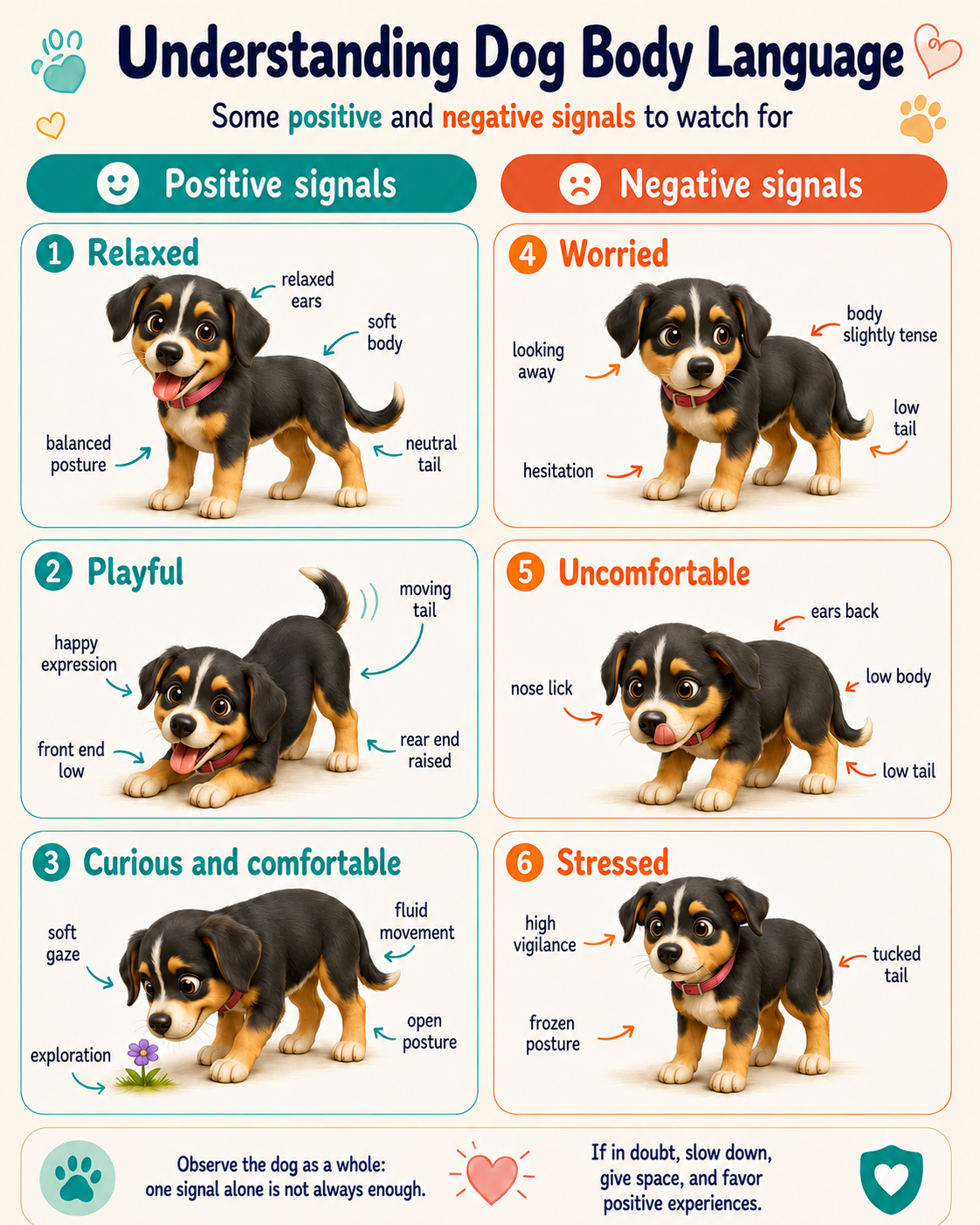
Learn to observe your dog
A dog does not necessarily need to bark or try to run away to be uncomfortable.
Pay particular attention to:
- body posture;
- tail and ear position;
- attempts to move away;
- slowing down or stopping;
- looking away;
- intense vigilance towards the environment;
- an inability to sniff or explore;
- suddenly refusing food;
- unusual breathing or agitation.
The earlier you notice and respond to these signs, the easier it is to prevent the situation from becoming genuinely difficult for your dog.
A puppy needs to discover the world… but gradually
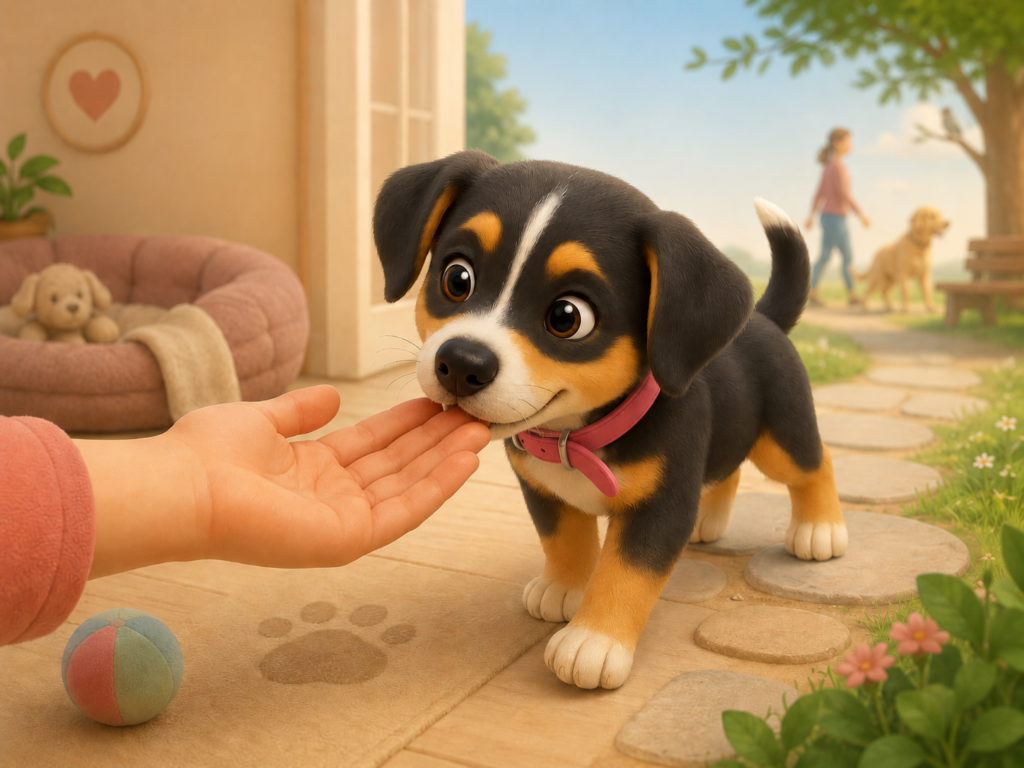
Socialisation is important, but it does not mean exposing your puppy to as many situations as possible.
The aim is instead to allow them to gradually discover different people, dogs, objects, environments, sounds and surfaces while remaining in a positive emotional state.
A few calm and positive experiences are far more valuable than a large number of experiences that overwhelm the puppy.
Puppies also need a great deal of sleep. Rest is an essential part of their development.
Don’t wait until a problem becomes serious
If your dog regularly shows:
- significant fear outdoors;
- difficulty leaving the house;
- strong reactions towards dogs or people;
- aggressive behaviour;
- significant anxiety;
- difficulty recovering after certain situations;
- or simply behaviour that you do not know how to interpret,
we strongly recommend contacting a qualified canine behaviour professional who uses respectful, reward-based methods as early as possible.
It is generally much easier to address a difficulty when it first appears than after it has become established for several months.
In some situations, a veterinary examination may also be necessary to rule out pain or a medical condition that could be influencing your dog’s behaviour.
And above all: give them time
Your dog may have changed country, climate and environment within just a few days.
They do not have all the answers yet.
Observe them, listen to them and give them time to understand their new life.
Do not try to move too quickly. Focus instead on giving them enough safety and security to be able to learn.